
Operating picture · measured 2026-09-03
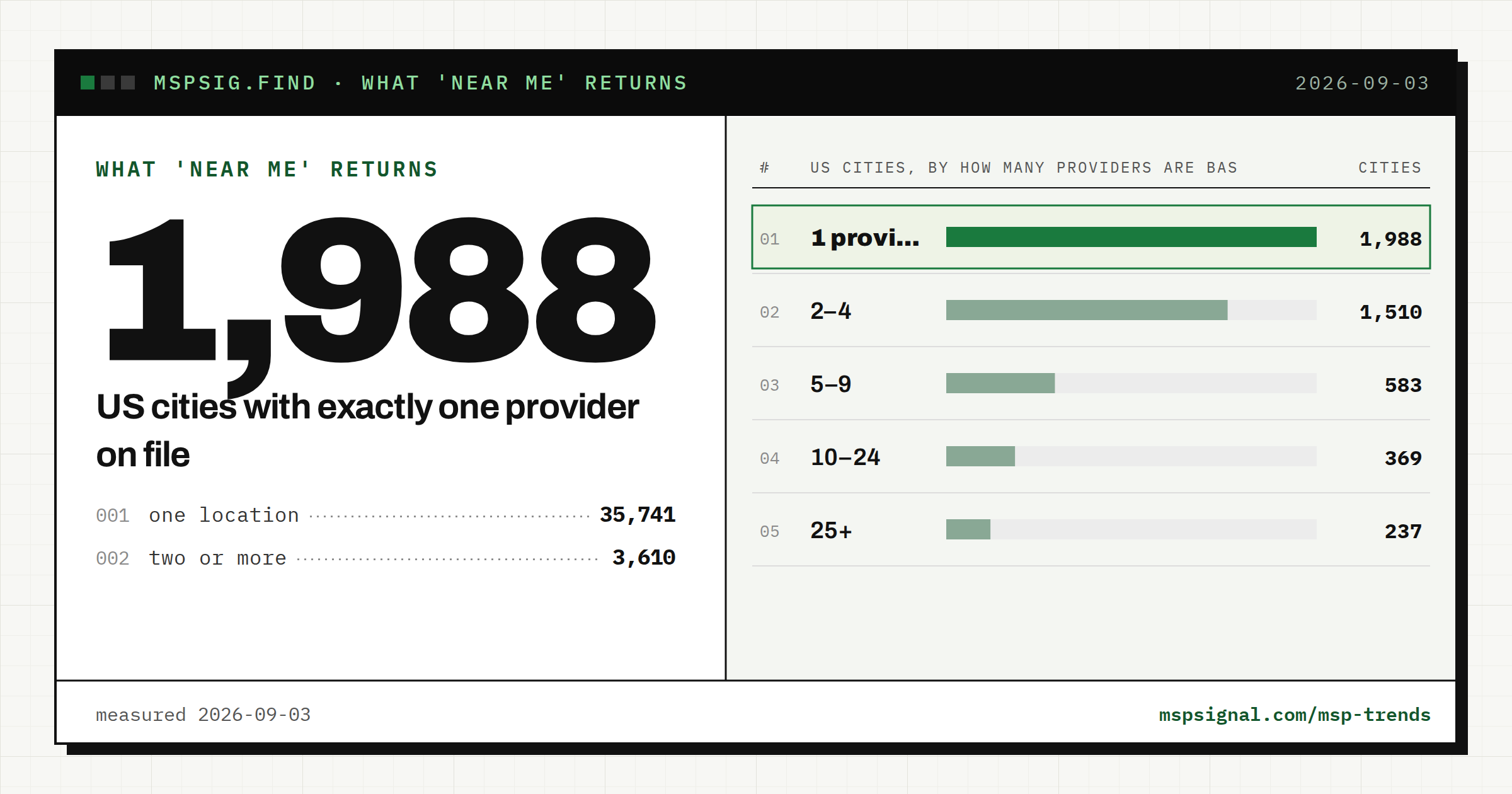
Half of all US MSPs sit in 237 cities. 1,988 towns have exactly one.
Measured across 4,687 cities: a crowded handful, and a very long tail with no real choice at all.
1 provider1,988 cities
2–41,510 cities
5–9583 cities
10–24369 cities
25+237 cities
1-provider cities1,988 firms
2–43,987 firms
5–93,788 firms
10–245,456 firms
25+19,803 firms
91% one location (35,741)two or more (3,610)
35,022 of 39,351 in-scope US providers have a city on file, spread across 4,687 distinct cities. as of 2026-09-03. City is self-reported and normalization is imperfect, read the individual city counts as approximate.
Limitations
- City comes from the address a firm publishes, and normalization is imperfect. Some metros are split across suburb names and some suburbs absorb their metro, so individual city counts are approximate and should not be read as metro market sizes.
- A city is on file for 35,022 of 39,351 firms, so 4,329 providers are not placed at all and appear in none of these counts.
- This measures where a provider is headquartered, not where it will travel. A firm in the next city is often the right answer and does not appear in your city's count.
- Footprint is classified for 17,200 of 39,351 firms. The local share is quoted against the firms we have classified, not against the whole directory.
- We do not rank providers on proximity. Proximity is not quality, and nothing on this card is a recommendation.
What to do with this
- Buyers: start from the city page for your metro, then compare on reviews, certifications and published hours rather than on distance.
- Providers: if you serve a radius rather than a city, name the towns. The 1,988 single-provider towns are the least contested demand in this market.
Cite this
MSP Signal, "Half of all US MSPs sit in 237 cities. 1,988 towns have exactly one.", measured 2026-09-03. https://mspsignal.com/msp-trends/managed-it-services-near-me
More findings
64%64% of US IT support companies have no reviews at all.2,79692.9% of US IT providers do not tell you they serve law firms.10.1%3,954 US IT providers name nonprofits, 10.1% of the directory.434Only 434 US IT providers name accounting, 1.1% of the market.
◂ All 92 findings